


Knee Ligament Injuries
Knee ligament injuries can affect stability, movement, and the ability to perform everyday or sports-related activities. The knee has four major ligaments—ACL, PCL, MCL, and LCL—that help control joint movement and maintain stability.
At Asian Orthopaedic Hospital, we provide comprehensive Knee Ligament Injury Treatment in Sabarmati, beginning with detailed evaluation and diagnosis. Depending on the type and severity of the injury, treatment may include activity modification, physiotherapy, bracing, medication, or ligament reconstruction surgery when clinically appropriate.
What Are Knee Ligament Injuries?
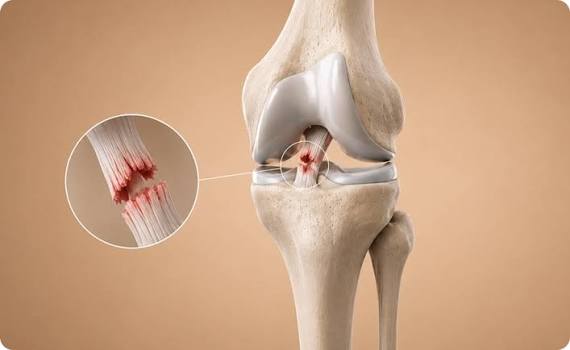
Ligaments are strong bands of tissue that connect bones and help keep the knee stable during movement. A ligament can become stretched, partially torn, or completely torn following a sudden twist, direct impact, awkward landing, or sports-related injury.
Knee ligament injuries may cause pain, swelling, stiffness, reduced movement, or a feeling that the knee is unstable.
Major Knee Ligaments
Anterior Cruciate Ligament (ACL)
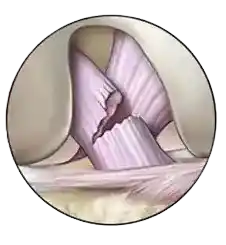
The ACL helps control forward and rotational movement of the knee. ACL injuries are commonly associated with twisting, pivoting, sudden stopping, or sports activities.
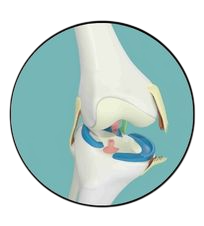
Medial Collateral Ligament (MCL)
The MCL supports the inner side of the knee and helps protect the joint from excessive sideways movement.
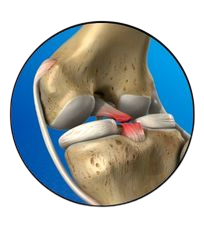
Posterior Cruciate Ligament (PCL)
The PCL helps prevent excessive backward movement of the shin bone and supports stability within the knee.
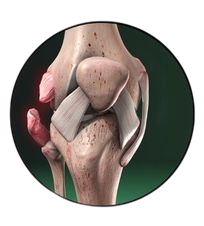
Lateral Collateral Ligament (LCL)
The LCL supports the outer side of the knee and contributes to stability during movement.
What Causes Knee Ligament Injuries?
Knee ligament injuries may occur due to:
Common Symptoms of Knee Ligament Damage
Depending on the ligament involved and severity of the injury, symptoms may include:
Persistent instability or symptoms after an injury should be evaluated by an orthopaedic specialist.
Knee Ligament Injury Treatment
Treatment for Knee Ligament Injuries in Sabarmati depends on the affected ligament, severity of damage, knee stability, associated injuries, and the patient’s activity requirements.
Non-Surgical Treatment
Selected ligament injuries may be managed with:
Surgical Treatment
Surgery may be considered for selected complete ligament tears, persistent instability, combined ligament injuries, or patients whose functional or sports requirements make reconstruction appropriate.
For significant ACL injuries, ACL Reconstruction Surgery in Sabarmati may be recommended after detailed evaluation.
Knee Ligament Injury Journey
A structured treatment approach helps address the injury from initial diagnosis through rehabilitation.
Recovery timelines vary depending on the extent of injury, surgical procedure, associated conditions, and individual healing. Regular follow-up and adherence to the recommended rehabilitation program are important throughout recovery.
FAQs
Get in Touch